Location (RTLS) tailored to the purpose

TIMATE supports real-time location in a scope tailored to the needs of the organization — from safety and evacuation, through access control, to work organization in large facilities.

The TIMATE system helps determine in which zone of the workplace a given person or team is located.
Comparison of location methods
Watch the video


How can location be used to support safety, work organization and access control?


Locate an employee in an emergency situation

In the event of an alarm incident, such as fall detection or use of the SOS button, the TIMATE card can send the approximate incident zone to the system using RTLS (Real-Time Locating Systems) technology. The alert appears on the facility map, which makes it easier to react quickly and reach the person who needs assistance.
More about supporting safety


Support access control to workplace zones

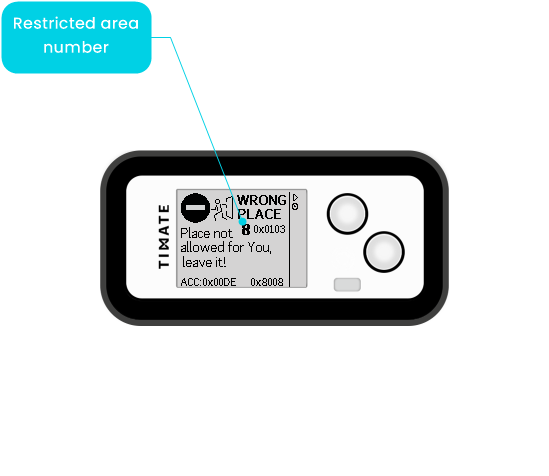
The TIMATE system can support access control by enabling identification of people located in a specific zone according to the adopted authorization configuration. TIMATE cards provide approximate location according to the adopted system configuration. When a person enters a zone without the required authorization, the card can display a message and the system can record an access violation alert.

More about access control


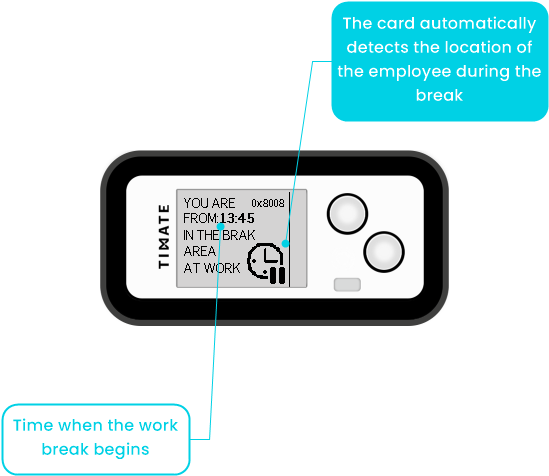
Support accounting for breaks related to staying away from the workplace

The location function can support identification of presence in other places within the workplace, for example in social areas such as a smoking area, canteen or locker room. Such data can support the recording of events related to a work break in accordance with the system configuration and the rules adopted by the employer. The final decision on whether or not to count the break as working time belongs to the supervisor.

More about work time utilization


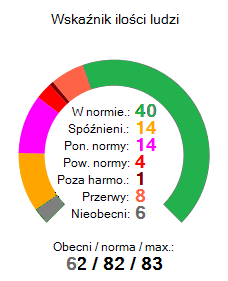
Count the number of people in the facility in real time

Thanks to the location function, it is possible to check in real time how many people are present in the facility or in its zones. In the event of an evacuation, such information helps coordinate actions and confirm more quickly that facilities have been vacated.


Improve work coordination in large facilities

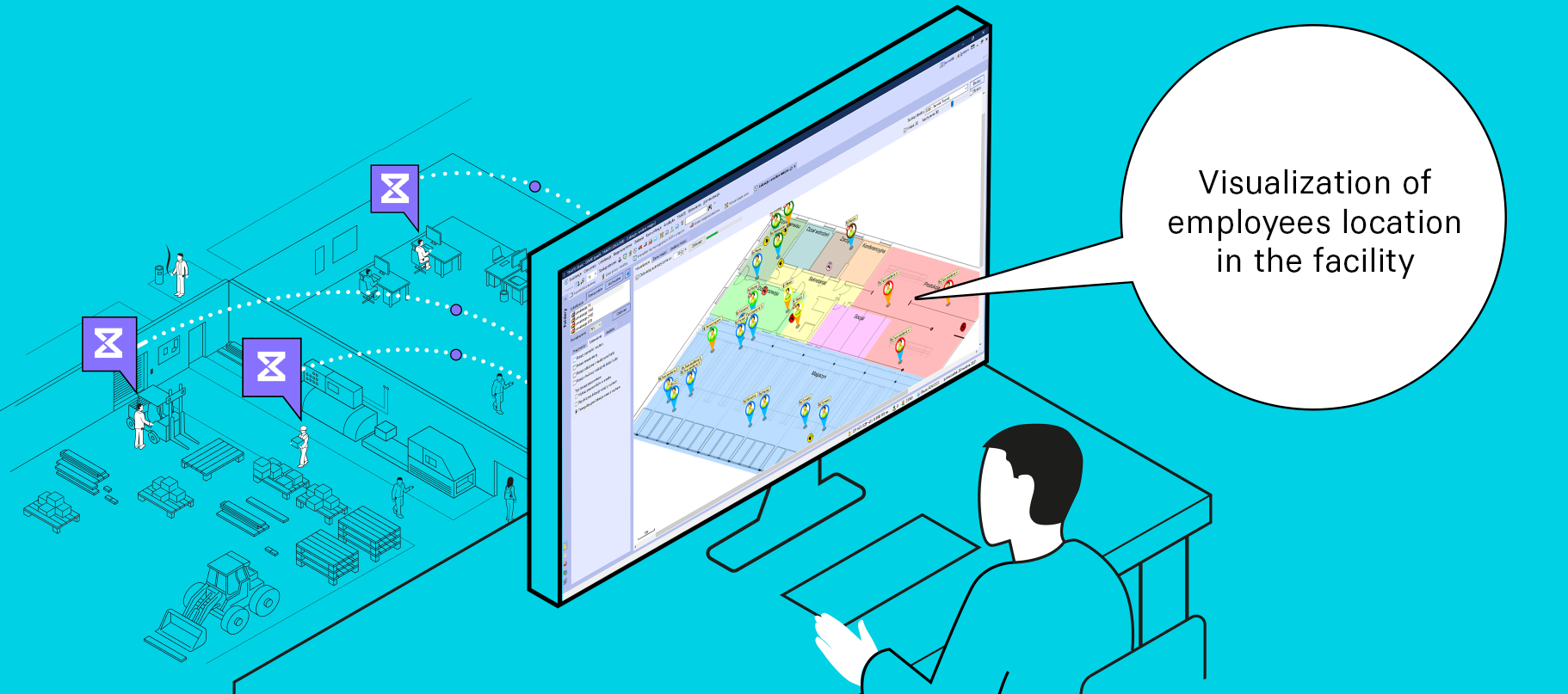
Production and warehouse halls are often very extensive. Interactive visualization helps determine the distribution of teams and people across facility zones, which improves task organization, operational communication and response to incidents in the facility.


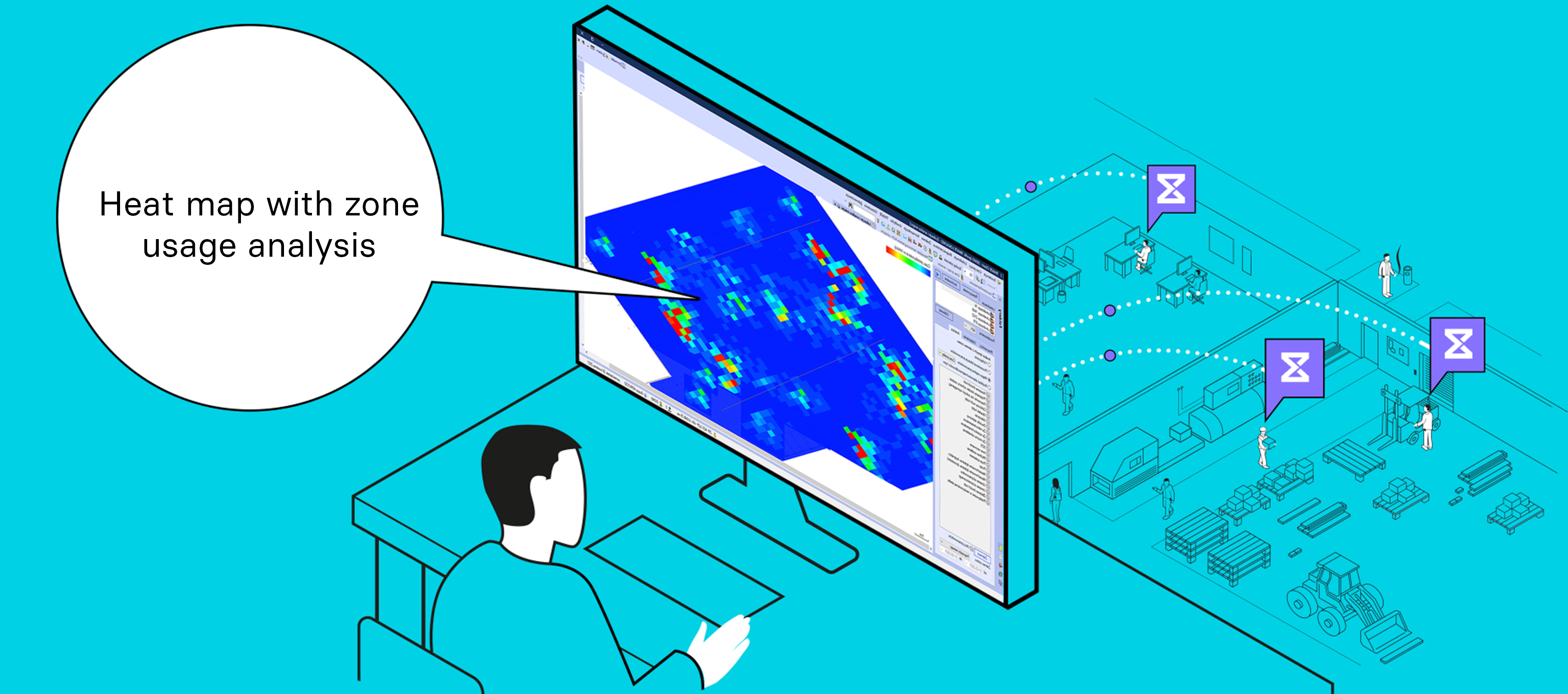
Analyze the utilization of individual places

The TIMATE system can create “heat maps” and reports showing the utilization of individual places at different times of the day. Such analyses help improve work organization, plan space and limit excessive crowding, especially when they are used at an aggregated level.


Adjust the accuracy of the location system depending on the needs of the facility

TIMATE cards do not have a built-in GPS module. To determine position, they use indoor location technologies or offline locators. The system can be configured so that the scope and accuracy of location are tailored to a specific purpose, for example safety, evacuation or access control. Location can cover the facility level or zones, and data can be recorded periodically or at the moment of an alarm event.

Comparison of location methods w pomieszczeniach


Support teams working in the field with offline locators

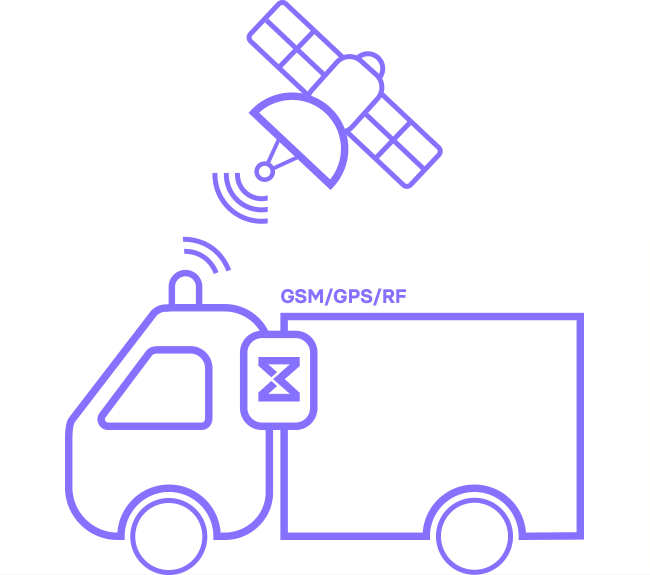
If employee teams perform tasks outside the company premises, you can use the cards’ offline mode and offline locators. The solution makes it possible to record team location events also where there is no permanent online infrastructure. Locators can be installed in the field, on facilities or on vehicles.

More about offline field work


Confirm the agreed place of remote work

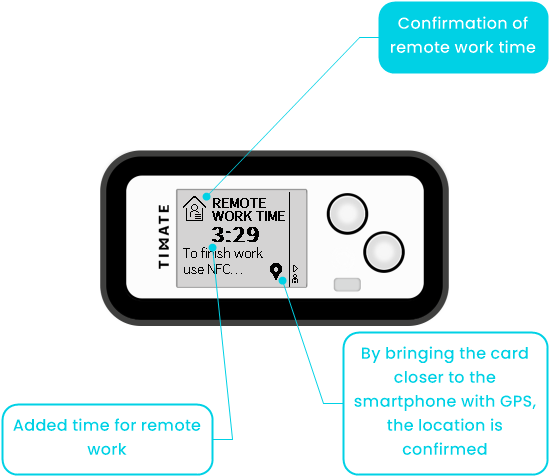
If an employee performs remote work, they can independently confirm the agreed workplace by bringing the TIMATE card close to a smartphone with a GPS module. The solution is designed as a point-in-time confirmation initiated by the employee, not continuous location tracking.

More about remote work