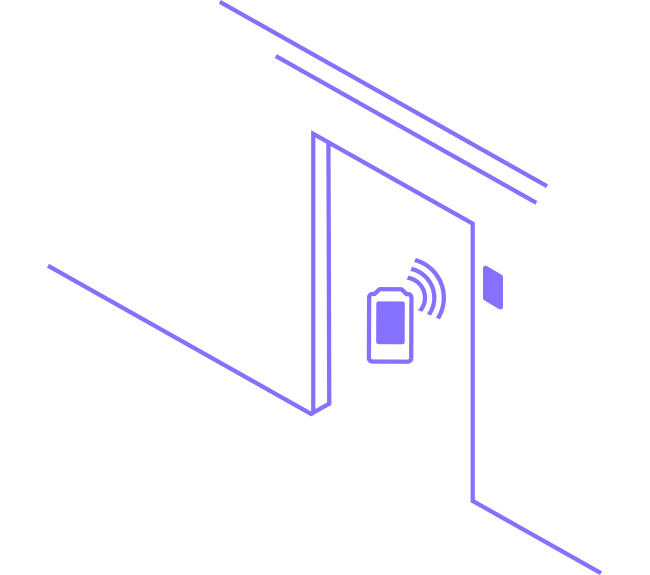
An employee can use their TIMATE card at the door and — if they have the appropriate permissions — gain access to a given zone.
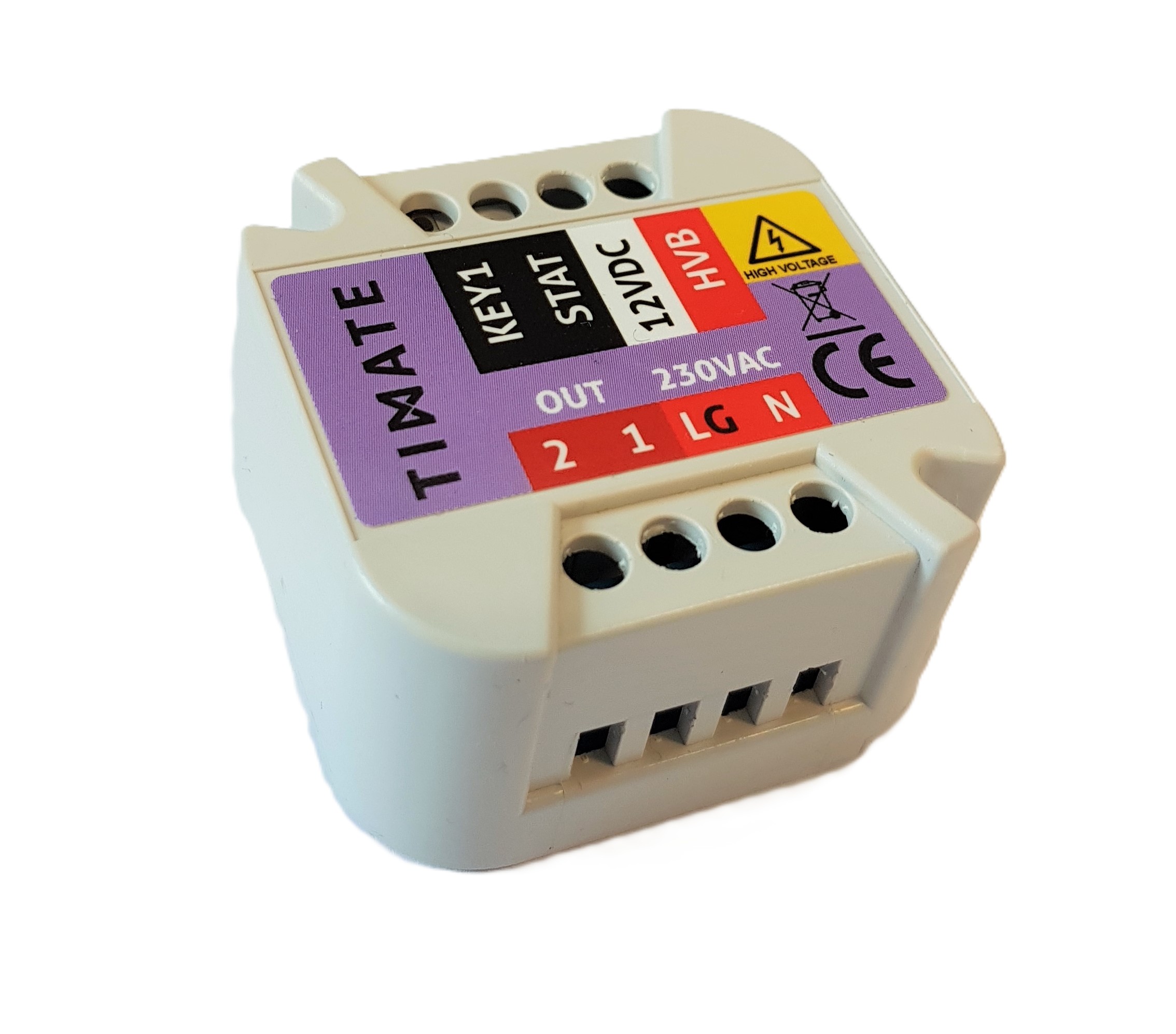
Connect TIMATE S2 controllers to electric strikes in doors. The dual-channel S2 controller can operate passage points in zones requiring access control.
The TIMATE CT-ET-POR system hub has a built-in RFID card reader. Thanks to this, it can operate at the door as a card reader and send a signal to the controller, unlocking or locking the passage. Both TIMATE cards and other NFC/MIFARE-compatible cards are recognized, which makes integration with existing access control infrastructure easier.
The S2 controller can also send information about door status to the system, for example whether the door remains open.
In the TIMATE application, you can grant access permissions to individual people or groups — permanently or temporarily, depending on role, location, and operational circumstances. Keep a record of granted permissions and a log of entry and exit events to maintain organizational order and clarity of access rules more easily.
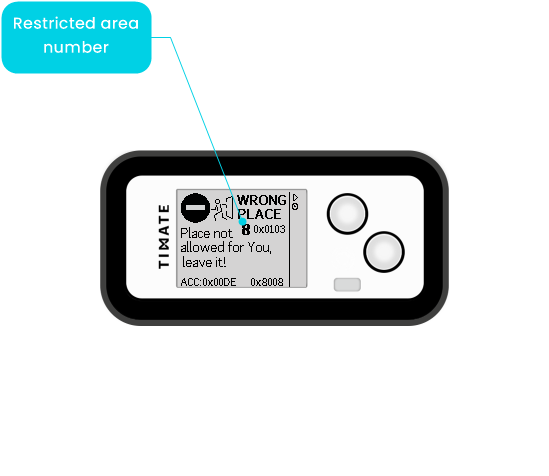
In selected zones, the system can support the detection of situations in which more than one person enters a room after a single passage unlock. With appropriate configuration, TIMATE can send a message to the card and an alert to the system, supporting a faster response to a potential breach of access rules.

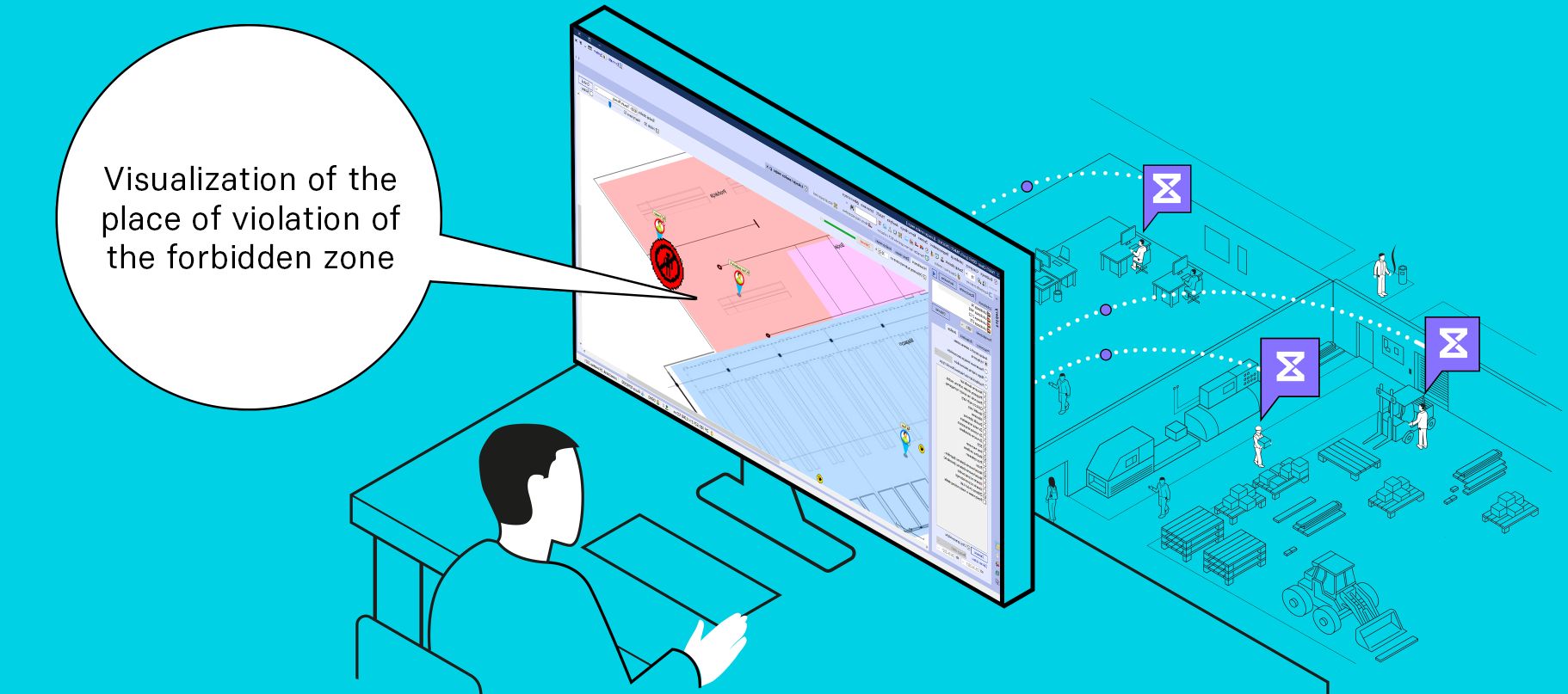
Thanks to the location mechanism, the TIMATE card can support verification of whether access to facilities, zones, or selected places is consistent with previously granted permissions. In justified areas, the system may inform an employee that they need to leave a location and may send an alert to security or persons responsible for facility safety about a possible breach of access rules. Permissions can be defined at the level of an individual employee or employee groups, with precision down to a facility, zone, or selected places.


If access to rooms is already physically protected with electric strikes, turnstiles, barriers, or other devices, TIMATE cards can work with the existing RFID card readers used in such solutions. TIMATE cards have a built-in passive, remotely programmable NFC tag in the ISO/IEC 14443 Type A standard with 4-kbit memory. If the readers operate in older technology, for example 125 KHz, it is also possible to use special stickers with RFID tags.