If the TIMATE system takes over some of the daily, routine organizational activities, managers gain practical support and more time for operational supervision, problem solving and leading their teams.
Many of managers’ routine organizational tasks can be structured and partially automated with the support of the TIMATE system. Areas such as work schedules, attendance confirmation, working time records, support for safety organization, and reporting to HR and management can be handled in a more consistent way and with less involvement of the manager’s time. This allows supervisors to focus more on leading the team and overseeing the course of work.
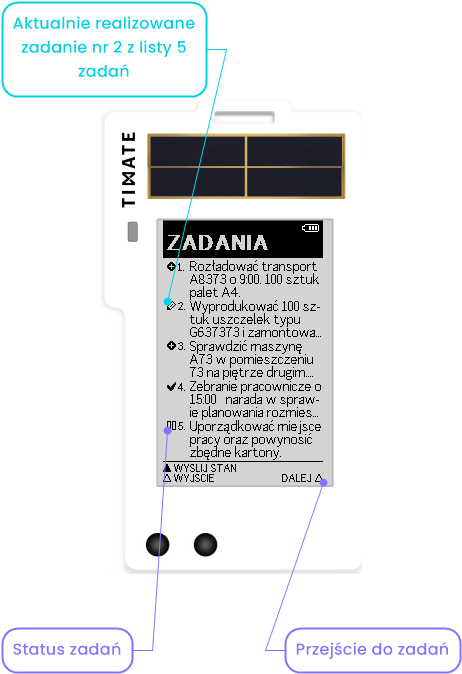
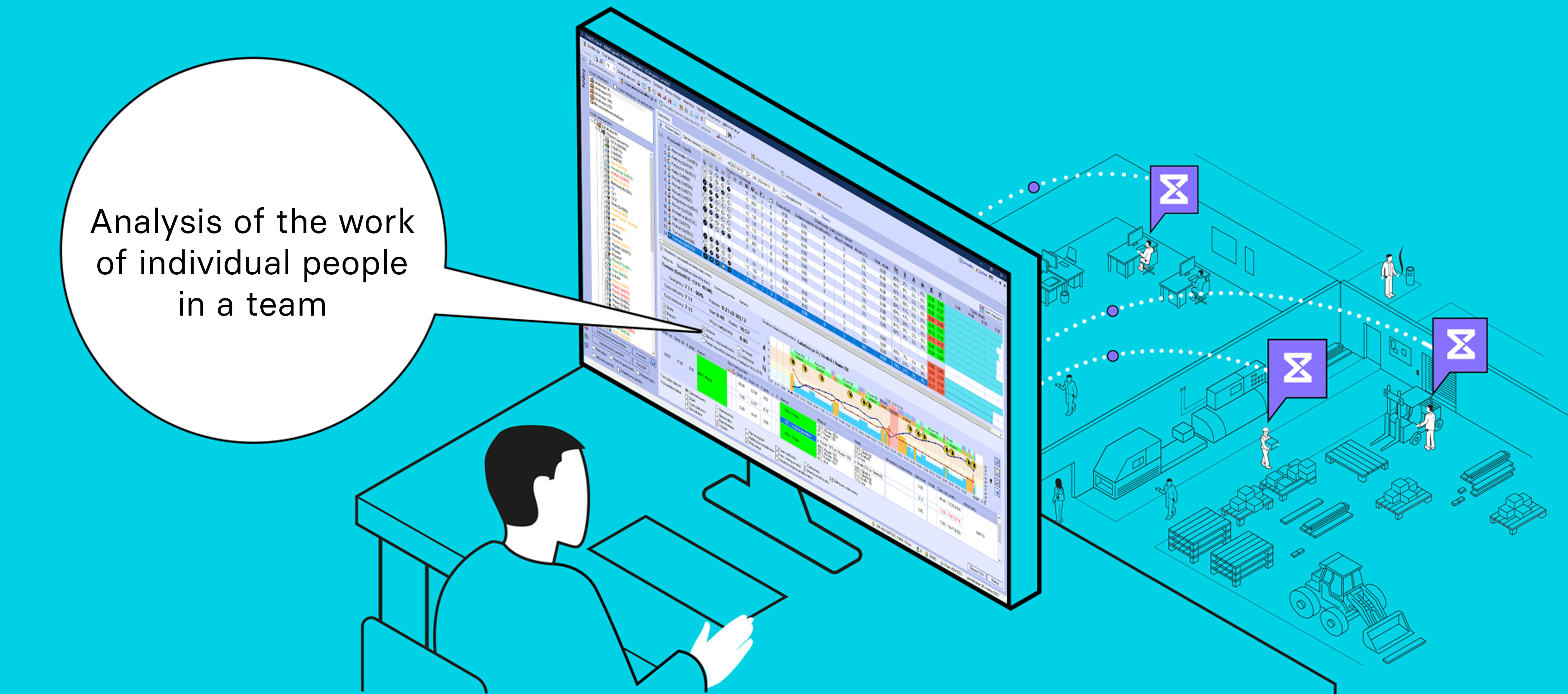
Managers spend a large part of their time preparing tasks, assigning them to employees and monitoring execution progress. Task delegation can be integrated with the company’s systems via API to transfer service, production or warehouse orders to individual employees. Tasks can be displayed on the card screen, and the employee can change their status to "completed". The system also records the time spent on individual tasks. This solution organizes the flow of information and supports managers in reporting task execution status and analyzing where and when costs arise.
The TIMATE system provides daily indicators and operational information that help managers quickly see in which areas the team is working efficiently and where organizational improvements are needed. The data is presented as clear signals and indicators supporting team work analysis and decision-making by supervisors.

TIMATE presents managers with concise information about selected areas of team work organization. Based on the data collected in the system, it is possible to identify signals concerning timeliness, task execution, work time organization or selected safety-related aspects. This information can be presented in a simple, clear form in the application and additionally as an aggregated icon on the manager’s card screen. It provides a starting point for discussion, analysis of causes and corrective actions. Such indicators should not be the sole basis for the formal evaluation of an employee or manager, but they can significantly support day-to-day management.


A manager can receive regular feedback based on indicators concerning team performance, such as work time organization, task execution, selected safety-related aspects or the consistency of work processes. This makes it easier to respond to problems on an ongoing basis rather than only during periodic reviews. Data from the system can support development conversations, organizational actions and the evaluation of supervisors’ work, but decisions regarding remuneration, bonuses or other employment-related consequences should also take into account the broader context and a human assessment by the superior.